Tommy Whittaker
The GiftTommy Whittaker’s story joins two forms of loss: the grief that has emptied his family after Annie’s death and the difficult choices facing Maribeth Robertson, a pregnant teenager without the support of her own home. At sixteen, he cannot undo either circumstance, but he responds with sustained acts of companionship. His attachment to Maribeth helps him speak into his family’s silence, while his respect for her decisions keeps love from becoming a demand that she abandon her education or take on a life she does not want.
Identity and Background
Tommy is John and Elizabeth Whittaker’s son and Annie’s older brother. When Annie was born, Elizabeth was forty-one and the family had not expected another child; Tommy was ten. He was a capable, well-liked boy involved in football, Little League baseball, and winter ice hockey, doing well in school while retaining enough mischief to seem ordinary. Although he needed time to adjust to having a baby sister, he came to adore Annie. Their days included the everyday closeness of the family kitchen: Annie waited for him to come home, and the two shared milk and cookies.
That bond had helped make the Whittaker household feel secure. Elizabeth had changed from full-time teaching to substitute work so she could spend more time with Annie, while John provided for the family through the wholesale produce business inherited from his father and grandfather. Tommy grew up within a home organized around family routines and care. Annie’s death does not merely remove his sister; it breaks the ordinary shared life on which those routines depended.
Grief and Withdrawal
When Annie lies unresponsive in the hospital, Tommy can no longer bear to watch Elizabeth pleading with her to wake. The nurses take him away, and he sobs as he sees how much the crisis is affecting both parents. Elizabeth can comfort him only briefly: she feels Annie needs her too urgently to leave her bedside. The scene exposes the competing demands of a family in crisis, in which Tommy’s distress is real but receives little sustained attention.
After Annie dies, Tommy retreats to his room and cannot face hers. He remembers her as she looked in the hospital, and her final words haunt him. He questions why she died and why it could not have been him instead, but tells no one what he is feeling. The family’s silence deepens after the initial visitors leave. On returning to school, Tommy finds that people know what happened but do not speak to him about his sister; even his hockey coach avoids mentioning her. Their restraint offers him no place to express his grief, and the pity he imagines in other people’s looks makes ordinary encounters harder.
His withdrawal becomes a pattern of daily avoidance. He stays at hockey practice as long as possible, eats little, and cannot bear the kitchen table without Annie or the after-school ritual of milk and cookies. Sometimes he eats a few cookies in his room instead of having dinner. His parents also stop eating properly and increasingly avoid one another. The three survivors live separately in the same house, each evading the pain of being together and feeling Annie’s absence between them.
Friendship with Maribeth
Tommy’s first connection with Maribeth begins at Jimmy D’s, where she works as a waitress. He has become a regular, quiet customer who orders meat loaf and mashed potatoes. Julie notices his sadness and suggests that Maribeth wait on him. Unlike the isolated boy Julie describes, Tommy becomes talkative with Maribeth. Their growing ease leads him to invite her to spend an afternoon together, and she accepts because she trusts him and feels safe with him.
Both are sixteen, with birthdays only weeks apart, but their circumstances are sharply different. Tommy has parents, a home, and the prospect of returning to school. Maribeth has been sent away by her father after becoming pregnant and expects to give birth within months. She is trying to make an independent life in Chicago, where she works while continuing her studies. Their friendship develops without erasing this imbalance: Tommy can offer companionship and practical support, but he cannot assume that her crisis is his to direct.
Maribeth becomes part of his private understanding of grief. When she asks him to speak freely, he recognizes their bond as a lasting friendship and lets her into a part of himself he has kept closed. He also listens as she describes her pregnancy and her uncertainty about whether she can raise the child. She fears both the permanence of parenthood and the pain of surrendering the baby. Tommy does not answer those questions for her. He comforts her and promises not to leave, offering commitment rather than a solution that overrides her judgment.
Love, Responsibility, and Education
Tommy’s feelings deepen into love, which he tells Maribeth plainly. He wants to be present for her and the baby, though the child is not his. Their relationship becomes physically affectionate, but they agree not to go further. Maribeth is clear that she does not want to become pregnant again, and that if she has children in the future, she wants that choice to belong to a later life she has chosen. Tommy accepts that boundary even while his own feelings are strong.
He also helps protect her education from the interruption that pregnancy and work might otherwise impose. After returning to school, Tommy copies the curriculum, lends Maribeth his books, and works through assignments with her at the restaurant and in her room. She keeps up with the same work he is doing, and he recognizes that she is an even stronger student than he is. The arrangement is concrete support for her stated ambition to finish school and pursue college, rather than a promise that she must give up that ambition for their relationship.
When Tommy tells his parents that he loves Maribeth, his father fears that he intends to marry her or take responsibility for the baby. Tommy says he would marry her and raise the child if she wanted that, but she wants neither; she wants an education first. He understands that marriage would be wrong if it required her to surrender her plans. His answer shows the distinction between wanting a shared future and claiming the right to decide what that future should be.
Family Repair and the Adoption
Tommy’s new friendship helps him recognize how completely his parents have withdrawn from him. He sees Elizabeth and John speaking to each other with little warmth and realizes that they have treated him as though he, too, left with Annie. He speaks up, asking them to spend time together again and reminding them that Annie would not want their lives to remain broken. His appeal does not end their grief, but it gives the family a reason to try to reconnect.
He brings Maribeth to meet his parents when she is almost seven months pregnant. She wears her best dress, bought after she outgrew her clothes, and makes the effort because meeting them matters to Tommy. The introduction is a turning point in her relationship with the Whittakers: she is not simply a girl he sees after school but someone he trusts enough to bring into his family life. Elizabeth in particular comes to care for Maribeth and understands that she will need support after the birth and separation.
At first, Maribeth’s plan is to give up the baby through an adoption arrangement. A baby shower at the restaurant changes the emotional reality of that decision. The gifts include knitted clothes, a blanket, a teddy bear, toys, diapers, and a high chair. Seeing the objects gathered for a child she will not raise makes the impending separation newly concrete, and she asks Avery MacLean about finding adoptive parents. In time, however, she asks Elizabeth and John to adopt the baby themselves. Tommy’s family becomes part of the choice she is making, not because he can claim the baby, but because Maribeth trusts the Whittakers and wants to entrust the child to them.
After Kate’s birth, Tommy’s family prepares for the baby: John and Tommy repaint Annie’s old bassinet, and Elizabeth dresses it with pink gauze and ribbons. Maribeth confirms that she still intends to place Kate for adoption. Three days after the birth, she signs the papers with a shaking hand and waives the waiting period. She asks that Kate not be brought to her that day so she can begin to mourn the child she is giving up. When Maribeth later stays with the Whittakers, Elizabeth responds to Kate’s cries, while Maribeth deliberately keeps her distance, knowing that the mothering role will belong to Elizabeth.
Separation and Continuing Bond
The adoption reconnects the Whittaker household with the work of caring for a child, but it does not remove the cost to Maribeth. Tommy sits with her after she signs the papers; they both wish events could have been different, and she believes the decision is right for Kate. He tells her that things will be different next time, looking toward a future rather than pretending that their present circumstances can be changed. His love remains bound to the difficult reality that she must leave to return home and finish school.
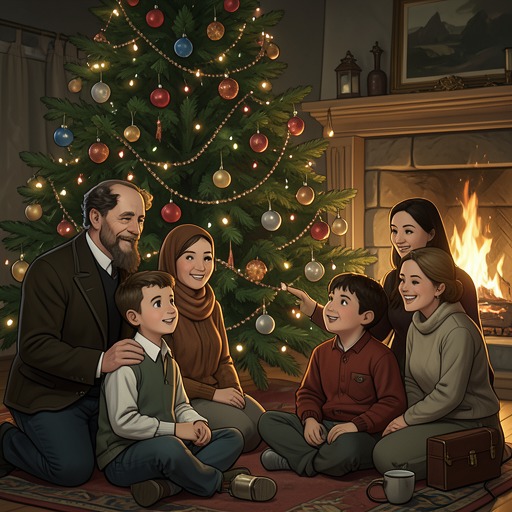
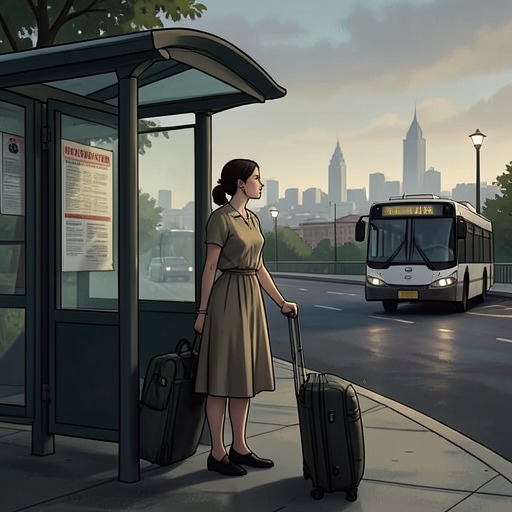
John offers Maribeth the education fund originally set aside for Annie. The Whittakers and Maribeth’s father agree that she should return home, complete school, and then choose where to attend college; the Whittakers also offer her a place to stay. Tommy supports the plan even though he hates the thought of her leaving. In their final days together, the two revisit places they share, including the lake and Annie’s grave, and take down Annie’s Christmas tree. These walks and journeys give shape to their farewell without turning it into a final severance.
Tommy promises that he will follow Maribeth if she does not return and insists that their relationship is not over. Maribeth says she will apply to college near him as well as elsewhere, while acknowledging that she does not yet know what being close to Kate will mean for her. Their future is uncertain, but both regard the bond as real and worth preserving. Tommy’s ending is therefore not a completed recovery or a settled romance: it is a commitment to keep loving across distance while both teenagers grow toward choices they have not yet made.